
The Doomscrolling Loop: Why Bad News Feels Impossible to Put Down
Why does one alarming headline turn into twenty minutes of scrolling that resolves nothing? The evidence behind the doomscrolling loop, and how to interrupt it.
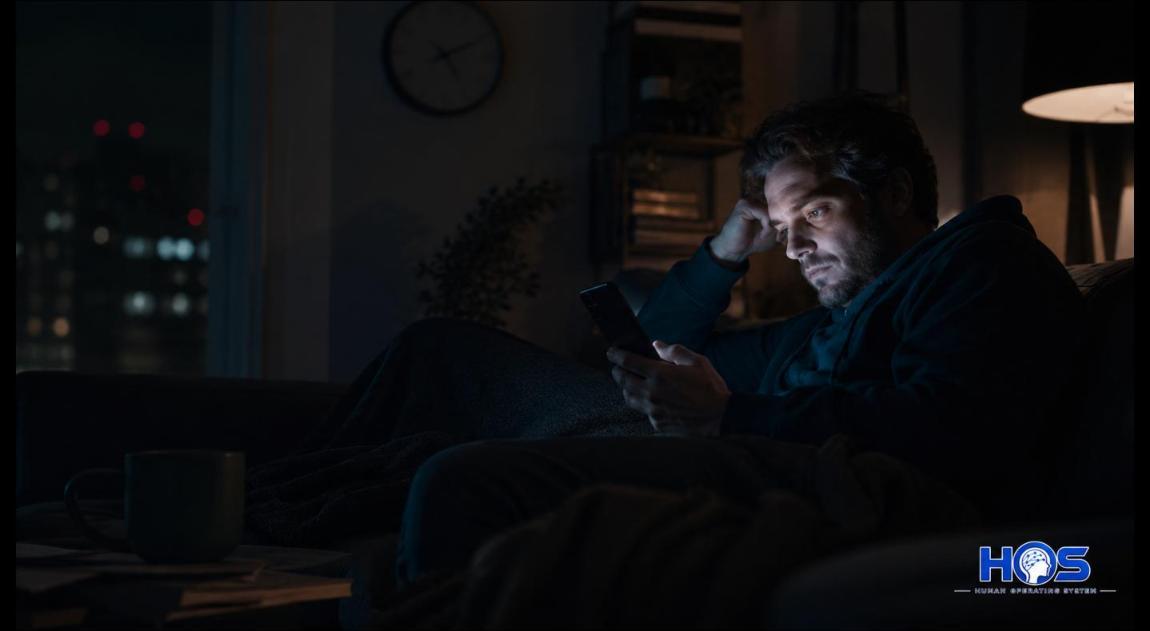
It’s 11:47 on a Tuesday morning. Somewhere between a work email and a coffee refill, a headline appears on a phone screen - an explosion, an outbreak, an election result nobody predicted. The thumb moves before the decision does. One story leads to a related one, then a comment thread arguing about the story, then a video summarizing the comment thread, then another headline that looks almost identical to the first. Twenty minutes pass. Nothing more is understood than was understood at 11:47:05. The story hasn’t changed. The reader has, a little more tired and no more informed than when this started.
This isn’t quite the failure of willpower it looks like. It has a name now - doomscrolling - a pattern researchers have only recently begun to study and define in its own right.
The behavior with a name
Researchers only began studying doomscrolling as its own distinct behavior recently. A 2022 study in the journal Technology, Mind, and Behavior, by Bhakti Sharma, Susanna S. Lee, and Benjamin K. Johnson, defined it as a habitual pattern of repeatedly seeking out negative information on social media newsfeeds - something distinct from ordinary news reading in its compulsive, repetitive quality. A separate 2022 study by Seydi Ahmet Satici and colleagues, published in Applied Research in Quality of Life, built and validated a scale to measure the behavior across three separate samples of adult social media users. The study found associations among doomscrolling, fear of missing out, problematic social-media use, psychological distress, and lower measures of wellbeing. Its statistical model examined psychological distress as a possible mediating pathway, but the cross-sectional design cannot establish which factor caused the others. Like the Sharma et al. study, this one relies on self-reported survey data collected at a single point in time, so it cannot show that doomscrolling produces distress rather than distress producing doomscrolling - only that the two travel together.
Why bad news gets the click
None of this is new to human attention. What’s new is the delivery mechanism. In a 2014 study published in The International Journal of Press/Politics, Marc Trussler and Stuart Soroka invited university participants to what they were told was a study of eye tracking, then quietly measured which news stories participants actually chose to read from a realistic list of options. Even though the same participants said afterward that they preferred positive or substantive news, their actual browsing behavior favored cynical, negative stories. What people say they want and what they reach for don’t match, and the mismatch shows up even when no algorithm is involved at all.
That gap shows up in the body, not just in click data. A large 2019 study in the Proceedings of the National Academy of Sciences, led by Stuart Soroka with Patrick Fournier and Lilach Nir, measured skin conductance and heart-rate variability in more than 1,000 participants across seventeen countries and six continents while they watched real BBC World News video segments. On average, across the full sample, negative stories produced a stronger physiological reaction than positive ones - a pattern the researchers describe as a genuine cross-national negativity bias. But they were equally clear that individual responses varied considerably, and that this variation wasn’t well explained by country or culture: some people within every country studied reacted far more strongly than others. Attention to threat isn’t simply a personal flaw or a modern weakness, but it also isn’t automatic or uniform. It behaves more like a common tendency that differs in strength from person to person.
The question that won’t close
Attention explains why a person clicks the first alarming headline. It doesn’t explain why they keep going. That has more to do with what a story leaves unresolved than with what it reveals. Psychologists Dan Grupe and Jack Nitschke, in a widely cited 2013 review in Nature Reviews Neuroscience, described how uncertainty about a possible threat, more than the threat itself, is what sustains anxious vigilance. When the outcome of a dangerous or unstable situation is still unknown, attention doesn’t relax; it keeps scanning for the one piece of information that would finally resolve it. Grupe and Nitschke were writing about anxiety broadly, not about phones or feeds, but the mechanism maps closely onto an unfolding news story: a natural disaster with an uncertain death toll, an outbreak with an unclear trajectory, an election too close to call. The reader keeps searching because the next headline might be the one that finally answers the question the last one raised. It rarely is, so the search continues.
A feed with no back page
A printed newspaper had an obvious edge to it: the back page, the final segment, the moment the broadcast returned to the studio and ended. A social feed doesn’t. Christian Montag and colleagues, in a 2019 conceptual review in the International Journal of Environmental Research and Public Health, examined design features common across social media platforms and freemium games - including infinite scroll, unpredictable rewards, and frequent notifications - and the shared effect these features can have: none of them naturally prompt a session to end. The paper doesn’t claim to have experimentally proven that any platform intentionally engineers people to stay past their own wishes; it’s a design analysis, not a controlled study of doomscrolling itself. What it does establish is that these features are common, well documented, and mechanically suited to prolonging engagement rather than closing it. Layered onto an attention system already tuned toward negative, unresolved information, a feed like this gives a reader little natural reason to stop.
Staying informed versus monitoring on loop
None of this makes following the news a problem in itself. Staying informed about a war, an outbreak, or an election is a reasonable and sometimes necessary use of attention, and looking away entirely isn’t the goal here. The shift worth noticing is the one between checking for a specific piece of missing information and continuing to scroll well after the useful information has already arrived - reading a fortieth similar post about the same event without learning anything the first ten didn’t already cover, or refreshing a feed for news that, realistically, will not have changed in the last ninety seconds. At some point the content stops adding understanding. The scrolling continues anyway, running on the momentum of the loop rather than on anything left to learn.
What the research actually shows
It’s worth being precise about what the current evidence supports and where it stops. It supports a defined, measurable behavior pattern (Sharma et al., 2022); associations among that pattern, fear of missing out, problematic use, and lower wellbeing, without establishing which causes which (Satici et al., 2022); a documented gap between what people say they want to read and what they actually read (Trussler & Soroka, 2014); an average cross-national physiological bias toward negative stimuli alongside considerable individual variation (Soroka et al., 2019); a well-established neuroscience of uncertainty and anxious vigilance, applied here by analogy rather than direct study (Grupe & Nitschke, 2013); and a conceptual design analysis of engagement features that can prolong a session rather than close it (Montag et al., 2019). None of these studies tracked the same people for years to prove that doomscrolling causes lasting harm, and none are specific to every platform or every kind of news event. The honest picture is a behavior that is well described and mechanistically plausible, built from several adjacent bodies of research rather than one resting on a single definitive cause-and-effect study.
Interrupting the loop
Because the loop is sustained by an open question meeting a feed with no edge, interrupting it tends to work best when it restores both a stopping point and a boundary around when the question gets asked at all. In practice that can mean deciding in advance when news will be checked, rather than letting notifications set the schedule; choosing a small number of sources before opening a feed, rather than following wherever it leads; noticing the point where a new post repeats information already absorbed instead of adding to it; turning off repeated breaking-news alerts that re-trigger the same uncertainty response several times in a day; and, where a story calls for it, converting monitoring into one concrete next action, whether that’s donating, voting, or contacting someone, so attention has somewhere to go besides another scroll. None of this requires stepping away from the news. It just means deciding when to look, rather than letting the loop decide.
The same loop doesn’t only show up at midday. It has a nighttime version too, when the last light in a dark room is a phone screen and the search for resolution runs straight into the body’s need to wind down. If the loop follows you into bed, the nighttime version has its own triggers and stopping points.
The uncertainty driving all of this is old, older than any feed. What has changed is that the search for resolution used to run out of material. A newspaper ended. A broadcast ended. Now the material doesn’t end; only the reader’s attention does, eventually, usually later than intended. The real question was never simply why bad news is compelling. It’s why a mind built to stop searching once it finds an answer keeps searching in a place designed never to give it one.
For the wider picture of how interfaces are built to hold attention, see our guide to persuasive design.

Human Operating System
Human Operating System is a research-led publication about the human mind under digital pressure. We report what the evidence does - and does not - support.
About Human Operating SystemThe Weekly System
Join the launch list for one calm, research-led email about attention, memory, learning and the systems designed to hold your attention. No noise, no panic and no unsupported certainty.