Memory & Learning
Articles on what changes when notes, search, study tools and AI carry part of the thinking. The question is rarely whether memory is getting worse, but what is being traded for what. Start with the guide, or browse the shorter pieces below.
Articles in this topic

School Phone Bans: They Work on Phone Use, and the Learning Gains Keep Shrinking
Bans reliably cut phone use in school. The best-powered test, using locked pouches across 1,778 schools, found test-score effects indistinguishable from zero.

The Photo-Taking Impairment Effect: They Deleted the Photos and It Happened Anyway
Photographing something can impair memory of it, but deleting the photo changes nothing - so the outsourcing explanation fails, and the real mechanism is still unresolved.

Handwriting vs Typing: The Famous Study Was Corrected, the Replications Failed, and the Meta-Analysis Still Finds an Effect
The famous pen-vs-laptop study was corrected, two direct replications failed, and a 2024 meta-analysis of 3,005 people still finds a small handwriting advantage.

Does Lumosity Work? The FTC Said No, the Evidence Says You Get Better at the Games
You get better at Lumosity’s games. Against active controls, the evidence for transfer to everyday abilities is null, and the FTC settled deceptive-advertising charges.

Does Duolingo Work? Yes, Roughly as Well as a Beginner Class - and the Famous Number Is Not Evidence
Independent studies find Duolingo works about as well as a beginner class. The famous 34-hours claim comes from an uncontrolled, company-funded report.

Does GPS Make You Worse at Navigating? The Largest Study Found Nothing
Satnav is said to erode your sense of direction and shrink your hippocampus. The largest study found nothing, and the real effect looks like attention.

Does Music Help You Focus? Two Meta-Analyses Disagree, and the Lyrics Explain Why
Two meta-analyses of background music report effects of opposite sign. Whether music plays before or during the task, and whether it has lyrics, explains most of the disagreement.

Spaced Repetition: The Effect Is Real, the Rules People Quote Are Not
Spacing study sessions is one of the best-supported findings in learning research, but the popular rules about expanding intervals and fixed review ratios do not survive the evidence.

Speed Reading: What the Evidence Says About the Trade-Off
Does speed reading work? The research shows a trade-off between speed and comprehension that no technique removes, and why being able to reread matters.

Sans Forgetica: A Font Designed to Improve Memory, Tested Four Times, Found Not To
A font built to make reading harder so you remember more. Four independent labs tested it and found no memory benefit, while self-testing worked in the same students.

Do Audiobooks Count as Reading? The Comprehension Research Says Mostly Yes
Across 46 studies and 4,687 people, comprehension after listening is not reliably different from comprehension after reading. Two moderators qualify it: reading wins for inference, and it wins when you control the pace.

Hyperlinks: The Cost That Skilled Readers Turned Into a Signpost
The old finding was that every link taxes comprehension. Eye-tracking overturned it for practised adults, who now read links as emphasis, and left the cost sitting on hard words and on nine-year-olds.

Subtitles: "Captions Benefit Everyone" Is Not What the Evidence Says
Most under-30s watch with subtitles on. The strong evidence for captions is about language learners and new readers, not fluent native speakers, and the nearest relevant finding is uncomfortable.

Watching Lectures at 2x Speed: What It Costs You
A meta-analysis of 110 effect sizes gives a dose-response curve: near zero cost up to 1.5x, real but modest at 2x, large at 2.5x.

Reading on a Screen Versus on Paper: What the Evidence Actually Shows
Meta-analyses do find a paper advantage for reading comprehension. It is small, absent for narrative text, and may be a scrolling effect rather than a screen one.
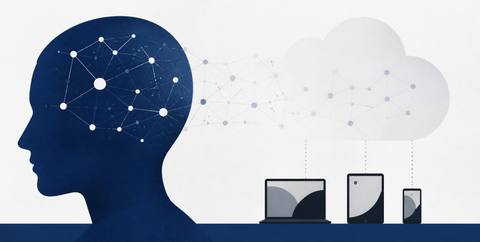
Digital Amnesia: The Term and the Evidence Behind It
Digital amnesia is a marketing term, not a diagnosis. Here is the research on what offloading memory to devices does and does not change.
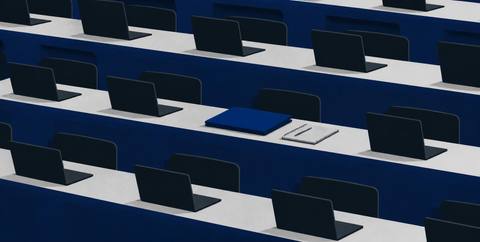
Laptops in the Classroom, and the Student Who Didn’t Open One
Randomised and field evidence on laptops in lectures, note-taking by hand, and the cost carried by nearby students who are not using a device.

How to use AI without letting it think for you
AI helps when it supports your thinking and hurts when it replaces it. Here is what the research actually shows, caveats and all, plus five rules for using AI without letting it think for you.
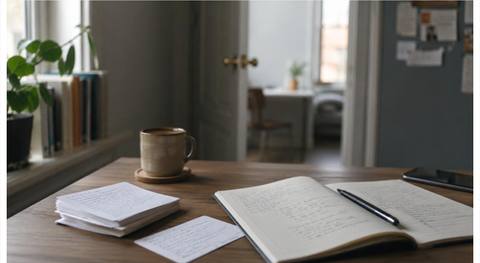
The Study Tools and Apps That Are Actually Worth It
Most study apps just help you reorganise what you've already forgotten. This guide sorts the best study tools for students by the job you actually need - memorising, problem-solving, organising, or protecting focus - starting with what's free.
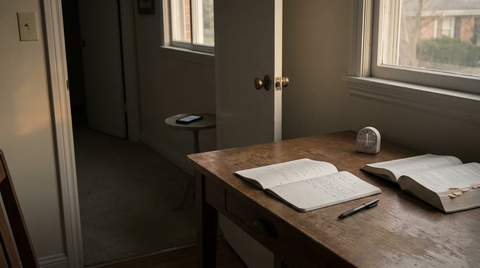
Why Studying Next to Your Phone Wrecks Your Memory
Memory is built by attention, and the phone is very good at taking a cut of it. Switching between studying and a screen weakens learning, even when the session still feels productive.
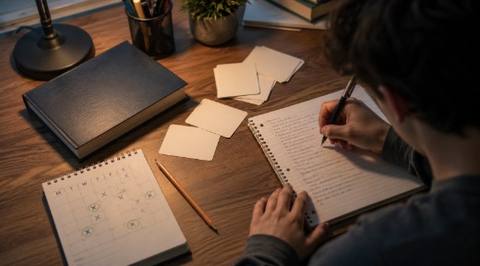
Why you can study for hours and still remember nothing
You almost certainly don't have a memory problem. You have a method problem - and it's one almost nobody is taught to see.
The Weekly System
Join the launch list for one calm, research-led email about attention, memory, learning and the systems designed to hold your attention. No noise, no panic and no unsupported certainty.